

On 22 June, the “cross-border payment line” between Mainland China and Hong Kong officially went online.
Q: What is “cross-border payments”?
Answer: “Cross-border payments pass” refers to linking the fast-disbursement system in the interior of the country to that of other monetary authorities, and developing policy arrangements to provide efficient, easy and secure cross-border payment services between residents of the interior and those outside the country.
It is known that Cross-Border Payment Inter-Hong Kong is an interface between the IBPS of Mainland China and the Hong Kong Rapid Payments System (HQPS) which allows users to make small cross-border transfers in real time by entering a mobile phone or bank account number of the recipient.
Q: What is the difference with traditional cross-border remittances?
Response: Cross-border payments have advantages over existing traditional cross-border remittances, such as real-time access, price preferences and operational convenience.
The first is to support users in initiating cross-border remittances of HK$ and HK$ between Mainland and Hong Kong through mobile phone banks, online banks, etc. of participating institutions, etc.; the second is to support real-time and off-the-shelf remittances within a certain amount under the current project; and the third is to support the direct interface of related payment infrastructure, which reduces the middle link and reduces the cost of cross-border remittances.
Q: Who can “cross-border payments” be used?
At present, the “cross-border payment line” with Hong Kong mainly provides immediate cross-border payment services to residents and institutions in the Mainland and Hong Kong.
Q: Which cross-border remittance scenarios might be used?
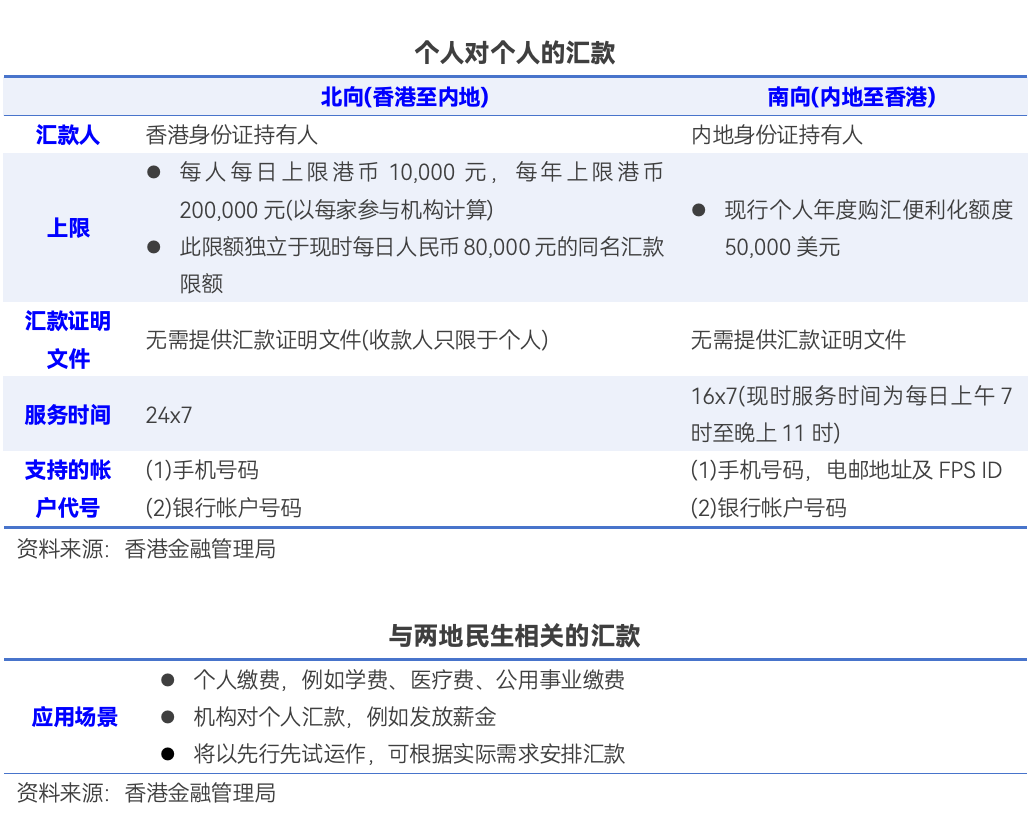
The answer: “Cross-cross-border payments” applies primarily to the following cross-border remittance business scenarios: first, “South-to-South” remittance operations, which are sent out to Hong Kong regional bank accounts by individuals in Hong Kong, may choose to transfer the renminbi, the renminbi or the HK$ to Hong Kong currency; second, “North-to-North” remittance operations, which are sent by individuals in Hong Kong to the Mainland bank account, may choose between the Hong Kong currency or the renminbi, or between individuals and institutions, the “Bi-cross-border currency payment operations”, such as study study fees, public utility contributions, access to health care, pay and subsidy, etc., may choose between the bilateral currency and the bilateral renminbi.
Q: How does it work?
In the case of agricultural banks, for example, clients enter the “cross-border payment pass” interface and fill out information on remittances through the Agricultural Bank's mobile phone bank.Port cardFPS IDs, mailboxes, mobile phone numbers and card numbers are available for real-time cross-border transfers, and the currency of entry supports the renminbi and Hong Kong currency, covering such life scenarios as study-at-school fees, medical fees and salary subsidies.
Q: Are there limits to remittances?
Response: “Cross-crossing Payments” individuals have a limited amount of remittances to individuals: a maximum of $50,000 per person per year to the south; a maximum of HK$10,000 per person per day to the north and HK$200,000 per person per year (in per participating agency).
Question: Which agencies were involved in the first “cross-border payments”?
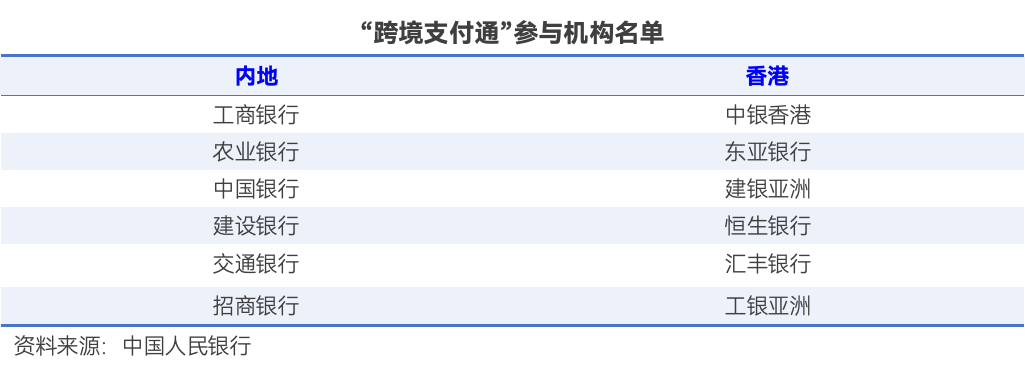
Response: The first Mainland institutions involved in cross-border payments are the Business Bank, the Agricultural Bank, the Bank of China, the Construction Bank, the Transport Bank and the Commercial Bank; Hong Kong institutions include the Bank of China and Hong Kong, the Bank of East Asia, the Bank of Bank of Bank of Bank of China, the Bank of Bank of China and the Bank of China. In the future, more institutions will be added to the service and coverage will be further expanded.
Q: How are the fees charged?
Response: In the initial period of operation, several banks were exempt from fees, not excluding the possibility of subsequent charges.