
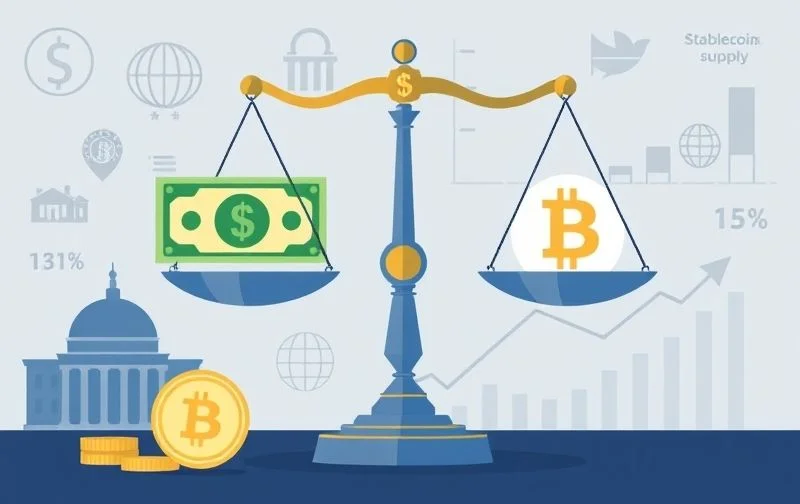
According to a notice issued by the United States Securities and Exchange Commission (SEC) on 4 April, a stable currency meeting certain conditions is considered a “non-securities” and the transaction reporting requirement is waived. The SEC refers to these eligible stabilizers as “protected stabilizers”, which are to be supported exclusively by a physical statutory reserve or a short-term, low-risk, highly mobile tool and can be converted to United States dollars at a ratio of 1:1.
The definition excludes the use of software or automated trading strategies to maintain dollar-linked algorithms to stabilize currencies, making the regulatory status of algorithms to stabilize currencies, synthesizing United States dollars and profit-based statutory tokens uncertain.
Overview of industry calls for reform and current status
Industry leaders and executives are promoting regulatory changes that allow stable money issuers to share income opportunities with holders and provide chain interest. However, under the new Guide, issuers of “protected stable coins” could not mix their asset reserves with operating capital, nor could they provide interest, profit or gain opportunities to currency holders. Moreover, the reserves of such issuers should not be used for investment or market speculation.
It was reported that, against the background of investor hedge volatility, the supply of stable currency increased by $30 billion in the first quarter of 2023.
The new regulations are consistent with policy objectives
The SEC criteria for “protected stable currency” are consistent with the provisions of the Chartered Stabilisation Currency Act 2025 introduced by Senator Bill Hagerty and the Stability Act 2025 introduced by Congressman French Hill. The two proposed legislations aim to protect the position of the United States dollar as a global reserve currency through a stable currency supported by the United States dollar and government securities.
Centralized stabilizers have endorsed their tokens to United States dollar deposits and short-term United States Treasury debt in regulated financial institutions, thus increasing demand for the United States dollar and United States Government debt. Tether, the world ' s largest issuer of stable currencies, has now become the seventh largest United States Treasury debt holder, surpassing countries such as Canada, Germany and Korea.
At the first White House Digital Assets Summit, held on 7 March, United States Treasury Secretary Scott Bessent stated that the United States planned to expand its dominance of the United States dollar with a stable currency. Bessent stressed that the regulation of the currency of stability was at the heart of the Government ' s digital asset strategy and was the top regulatory priority during the current legislative session.